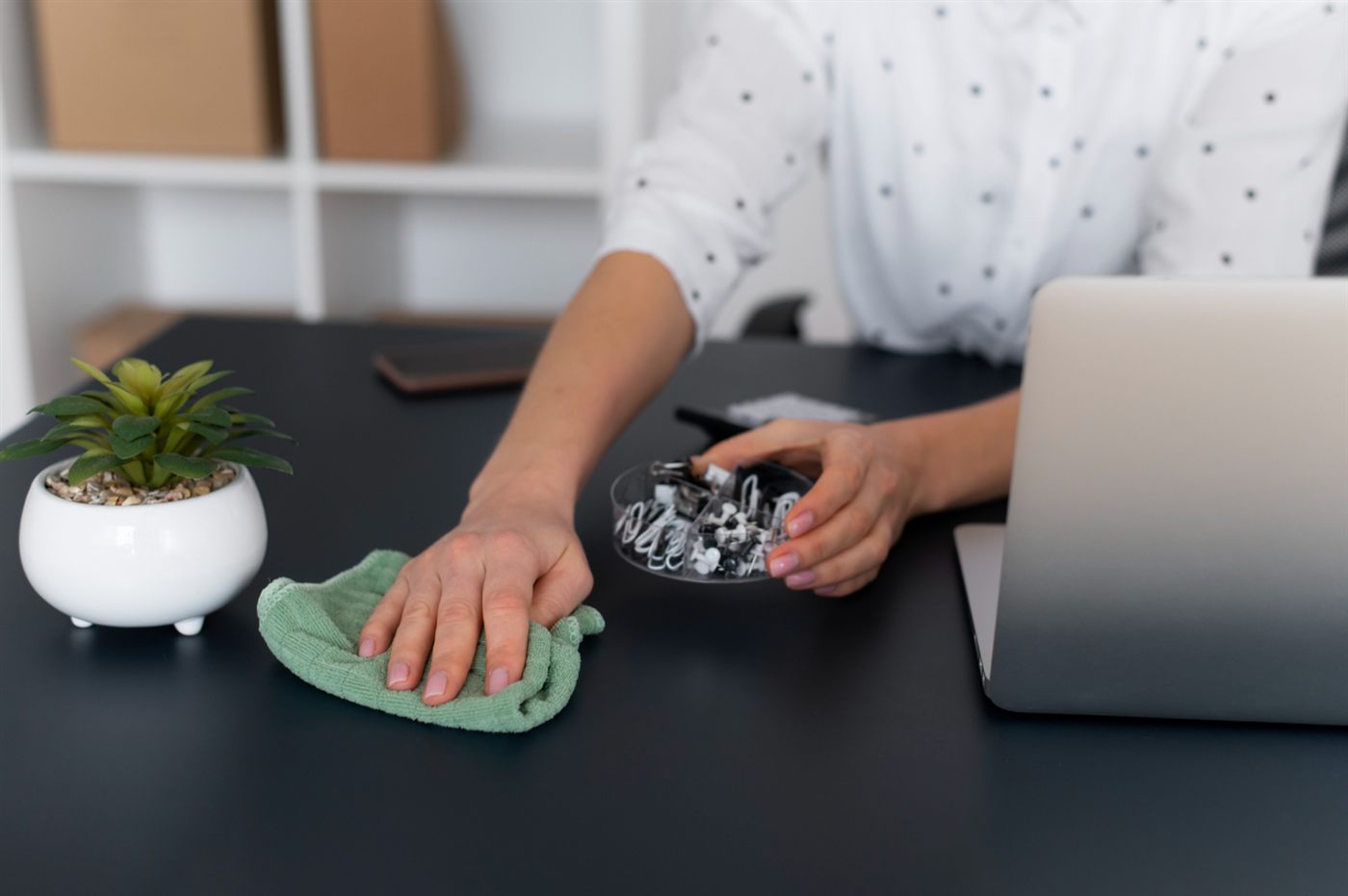
A shared-desk checklist works best when it describes observable tasks. “Desk ready” may be a useful final status, but the person checking it needs to know what was actually included.
Separate the list into areas of responsibility
Group furniture tasks and approved equipment-care tasks separately. Name who carries them out and where the instructions can be found. Keep cleaning products linked to their approved tasks rather than displaying a universal spray instruction at every desk.
Make exceptions easy to report
Add space for an unfamiliar item, a missing care reference or visible damage. A checklist should not encourage staff to tick a box when a task could not be completed appropriately. Identify whom to contact and whether the desk can be released for use.
Use a realistic handover example
A useful note might say: “Desk surface task completed; loan monitor left for IT review because the care instructions are missing.” That is clearer than recording the whole workstation as disinfected when the process did not cover it.
Try the checklist on one desk
Walk through it with the team and note any item that prompts a question. Clarify those points before using the list throughout the office. The shared-office surface-care guide sets out the furniture and device boundaries to check.
Frequently asked questions
Should a desk checklist include electronic equipment automatically?
Only include equipment tasks that have an approved method and responsible person. Keep unresolved items separate.
What is a useful exception note?
Identify the item, the unfinished task and the reason, then name the person responsible for follow-up.
Can a completed furniture task mean the entire workstation was disinfected?
No. Record the scope actually completed rather than extending the statement to equipment or other items.